


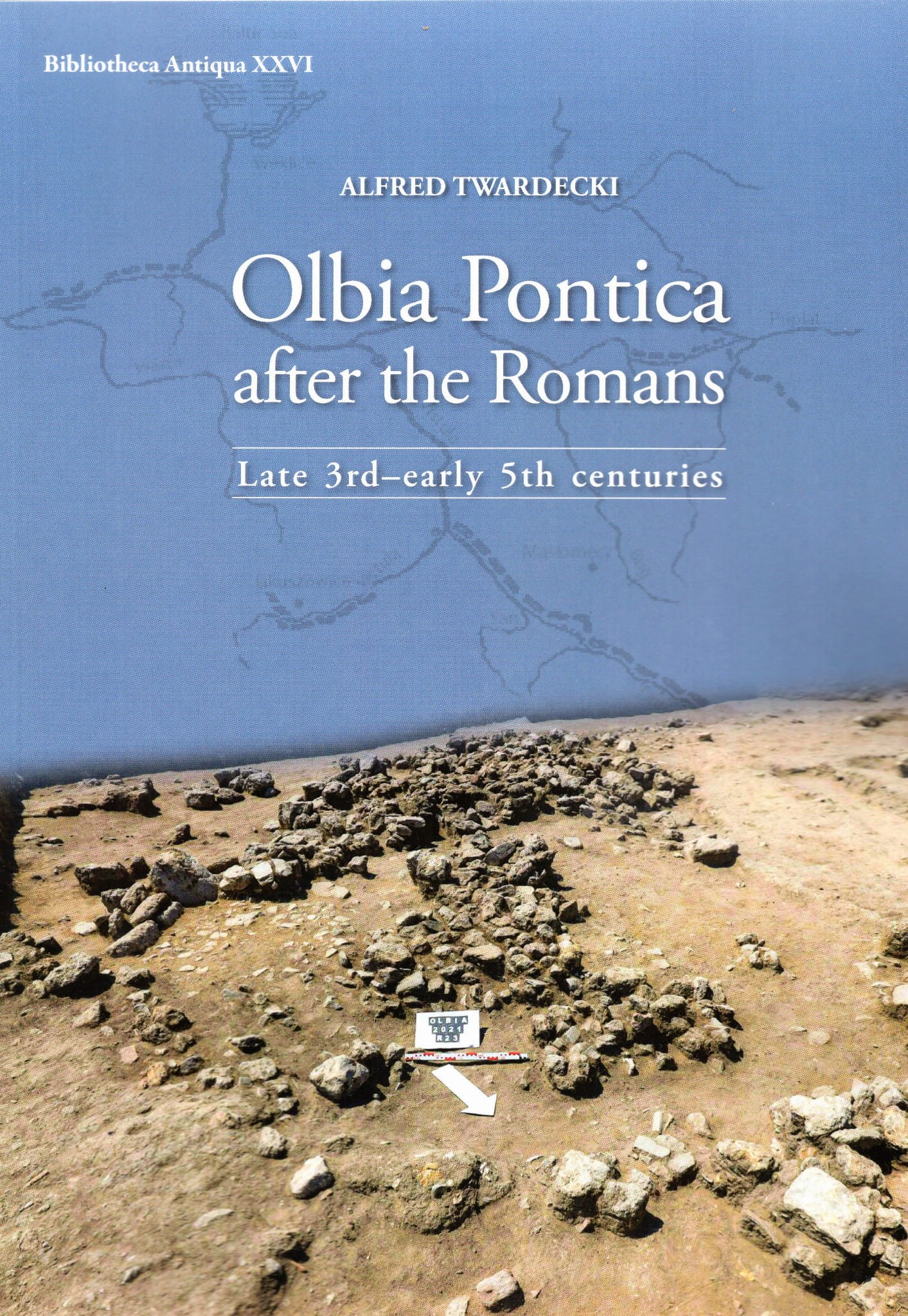
Olbia Pontica after the Romans - Bibliotheca Antiqua 26
Wystaw opinię o produkcie

Tytuł: Olbia Pontica after the Romans Late 3rd-early 5th centuries
- Bibliotheca Antiqua XXVI (26)
Autor: Alfred Twardecki
Wydawca: Wydawnictwo Instytutu Archeologii i Etnologii PAN
Miejsce wydania: Warszawa 00-140, Al Solidarności 105,Polska
Kontakt: bookshop@iaepan.edu.pl
Produkt: nie zawiera informacji o bezpieczeństwie
Rok wydania: 2025
Język: angielski
Liczba stron: 206
Format: A4
Okładka: miękka
ISBN: 978-83-68122-39-8
Kod produktu: 854
Opis
Table of Contents
Aurhor's Prefice
Acknowledgements
Introduction
CHAPTER 1 . The Geography of Olbia
1.1 Physical geography and natural conditions
1.2 Historical topography ofolbia
1.2.1 Literary sources
1.2.2 Climatic changes and their consequences
1.3 The political, economic, and logistical geography of. Olbia
CHAPTER 2. Archaeological Research and post-Roman Olbia
2.1 History and state of research on the Cherniakhiv Culture
2.2 History of archaeological investigations in olbia
2.2.1 Gothic olbia: controversy and reassessment
2.3 Excavation methodology
2.4 Interim conclusions
CHAPTER 3. Excavation Results from Trench R-23 (Upper Town)
3.1 General information and workflow
3.2 Results
3.2.1 Geophysical survey ofolbia
3.2.1.1 Resistivity survey
3.2.1.2 Magnetic survey
3.2.1.3 Data processing
3.2.1.4 Interpretation
3.2.2 Excavation findings and analysis
3.2.2.1 Season 2016
3.2.2.2 Seasons 2017-2018
3.2.2.3 Season 2021
3.2.2.4 Architectural complex and stratigraphic analysis
3.2.2.4.1 Utility zone
3.2.2.4.2 Residential and uriliqr horizon
3.2.2.4.2.1 Pit 1 and associated features
3.2.2.4.2.2 Second group: the eastern utility area
3.2.2.4.3 Settlement and production horizon
3.2.2.4.3.1 Refiise deposits with evidence of bone-working
3.2.2.4.3.2 Utility am with smll pits
3.2.2.5 Dating the site
3.2.2.5.1 Methodolorical approach
3.2.2.5.2 Excavation contexts
3.2.2.5.3 Ceramic evidence
3.2.2.5.4 Glass evidence
3.2.2.5.5 Coin evidence
3.2.2.6 Conclusions and future prospects
3.2.3 The Cherniakhiv horizon in olbia: an attempted synthesis
3.2.3.1 Introduction: research aims and source base
3.2.3.2 The Lower Town: residential architecture -peristyle house in Trench NG
3.2.3.3 Mortuary evidence: graves 181/1988 and 182 (NGSS, T-3)
3.2.3.4 Interpretation: reuse and symbolic fiinction
3.2.3.5 Upper Town: Trench R-25
3.2.3.6 Undetermined or isolated contexts
3.2.3.6.1 Trench III, Grave no. 8: context and cultural attribution
3.2.3.6.2 Comparative analysis: Grave s and Cherniakhiv burial practices
3.2.3.7 Synthesis: scope, distribution and interpretative constraints
3.2.4 Conclusions: patterns ofpost-Roman continuity in olbia
CHAPTER 4. Typological and Catalogue-Based Analysis of Small Finds
4.1 Ceramic finds
4.1.1 Cherniakhiv or local pottery
4.1.1.1 Grey ware pottery
4.1.1.2 Handmade pottery
4.1.1.2.1 Jars
4.1.1.2.2 ]ugs
4.1.1.2.3 Bowls
4.1.1.2.4 0ther handmade vessels
4.1.2 Imported pottery
4.1.2.1 Amphorae
4.1.2.1.1 Sinopean amphorae
4.1.2.1.2 Light-clay narrow-necked amphorae from Heraclea Pontica
4.1.2.1.3 Amphorae of the northeast Mediterranean
4.1.2.1.4 Amphorae of the northern Black Sea region
4.1.2.1.5 Summary
4.1.2.2 Red slip wares
4.1.3 Summary
4.2 Numismatic evidence
4.2.1 General overview
4.2.1.1 Roman coins and Cherniakhiv Culture
4.2.1.1.1 General remarks
4.2.1.1.2 Imperial denarii
4.2.1.1.3 Antoniniani
4.2.1.1.4 Roman provincial coins
4.2.1.1.5 Aurei
4.2.1.1.6 Siliquae
4.2.1.1.7 Solidi
4.2.1.1.8 Bronze coins
4.2.1.1.9 Conclusions
4.2.2 Coins found in Olbia
4.2.2.1 History of research
4.2.2.2 Coins from Trench R-23
4.2.2.2.1 Cappadocian coins
4.2.2.2.2 Denarii and antoniniani
4.2.2.2.3 Nummi subaerati, imitations and reused coins
4.2.3 Catalogue
4.2.3.1 Appendix
4.2.3.2 Special case: the latest coin from Olbia
4.3 Glass finds
4.3.1 Early Roman fine tableware and toiletry vessels (1st-3rd centuries CE)
4.3.2 Late Roman domestic and functional vessels (3rd-5th centuries CE)
4.3.3 Symbolic and potentially ritual glassware (4th-5th centuries CE)
4.3.4 Conclusions
4.3.5 Catalogue of Roman and late Roman glass vessels from Olbia
4.4 Fibulae
4.4.1 Catalogue
4.4.2 Summary of the catalogue
4.5 Composite antler combs
4.5.1 Catalogue of composite and single antler and bone combs from Olbia
4.5.2 Conclusion
4.6 Late Roman lamps
4.6.1 Catalogue of Late Antique lamps from Olbia
4.6.1.1 Imported and provincia.l mould-made types (3rd century CE)
4.6.1.2 Locally produced late Roman and transitional forms (4th-5th centuries CE)
4.6.1.3 Symbolic and Christian motif lamps (4th-5th centuries CE)
4.6.1.4 Hand-made domestic lamps from La.te Antique Olbia (4th-5th centuries CE)
4.7 Zooarchaeological analysis of animal remains from Trench R-23, 0lbia
CHAPTER 5. Cherniakhiv Culture Settlements around Olbia
5.1. Tyras in the Gothic and Hunnic periods
5.2 Komariv: a regional craft and settlement centre
5.3 Baltic-Pontic corridors: a working hypothesis
5.4 Conclusions
CHAPTER 6. Goths and Huns
6.1 The rediscovery of olbia in Old Polish sources: historiographical context
6.2 0lbia and the Gothic Wars: a revised historical interpretation
6.2.1 01bia and the Gothic wars: the status quo ofhistorical interpretation
6.2.1.1 From the Danube to Adrianople
6.2.1.2 Gothic integrarion and imperial conflict: from Alaric to Justinian
6.3 0lbia and the pagan Goths: a revised historical interpretation
6.3.1 Historiography of Gothic paganism
6.3.2 Archaeological absence of christianity in Olbia.
6.3.3 Pagan polity and ideologcal functions
6.3.4 From procopius to Radagaisus strategc role of Olbia
6.3.4.1 Procopius and the Chersonesus -Olbia axis
6.3.4.2 Gothic support and the Julianic legacy
6.3.4.3 The persecution cycle and religious conflict
6.3.4.4 From Atanaric to Alaric: political transition
6.3.4.5 Radagaisus and the final pagan invasion
6.3.4.5.1 Gothic leadership after Atanaric
6.3.4.5.2 The western crisis of the 390s and external alliances
6.3.4.5.3 Textual representations and interpretive caution
6.3.4.5.4 The structure and composition of the coalition
6.3.4.5.5 Aftermath and disappearance
6.4 Conclusion
CHAPTER 7. Final Remarks
Appendix
List of Figures
List of Tables
List of Diagrams
Bibliography
Bezpieczeństwo produktu
Producent
Instytut Archeologii i Etnologii Polskiej Akademii Nauk
Al. Solidarności 105
00-140 Warszawa, Polska
Opinie
Jeśli dodałeś/-aś recenzję, a nie pojawiłą się na liście, być może oczekuje na moderację.
Wystaw opinię o produkcie


